 Contents
What Is a MOPA Laser?
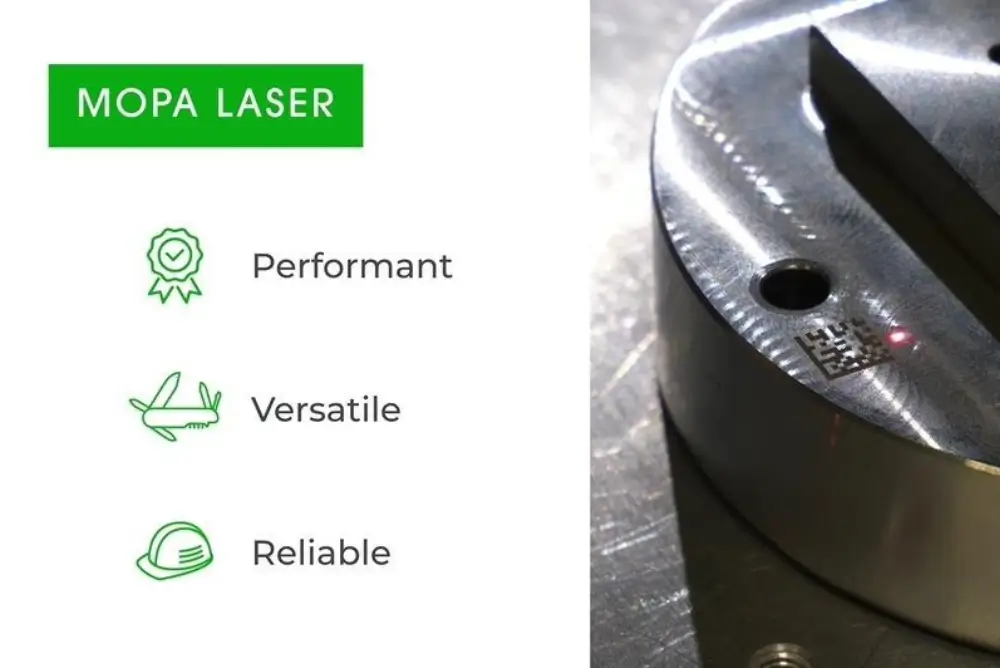
A MOPA laser (Master Oscillator Power Amplifier) is a type of fiber laser that allows much finer control over laser pulse characteristics. MOPA technology enables precise adjustment of pulse width, pulse frequency, and pulse energy, providing significantly greater control over the laser beam compared to conventional fiber lasers.

A MOPA laser system consists of two main components: a master oscillator and a power amplifier. By electronically controlling the oscillator, operators can fine-tune the pulse duration from just a few nanoseconds up to several hundred nanoseconds.
This high level of pulse flexibility makes MOPA lasers far more versatile than standard fiber lasers with fixed parameters. In addition, MOPA lasers differ from UV lasers in terms of wavelength: MOPA lasers typically operate at around 1064 nm, while UV lasers use much shorter wavelengths, commonly around 355 nm. This difference in wavelength has a direct impact on how the laser interacts with materials and the appearance of the engraved mark.
MOPA lasers are widely used in applications that require high-precision material processing, including:
- High-contrast engraving
- Color marking on metals
- Permanent, corrosion-resistant marking
- Deep engraving

How Does a MOPA Fiber Laser Work?
A MOPA fiber laser system generates light pulses and then amplifies them into a laser beam with sufficient power for engraving or marking. Depending on the selected parameters, the laser can emit short or long pulses to achieve the desired marking effect.
Seed Pulse Generator
The engraving process begins at the seed pulse generator, where a light pulse is created at a specific wavelength. Although this initial pulse has low power, key parameters such as pulse width, pulse interval, and pulse energy are controlled with high precision.
Electronic Control of Pulse Parameters
Once the initial pulse is generated, it passes through an electronic control system. At this stage, engineers can adjust:
- Pulse width: enabling the generation of short or long pulses, ranging from a few nanoseconds to several hundred nanoseconds
- Pulse repetition frequency: determining how frequently pulses are emitted, which directly affects engraving speed and heat accumulation
- Peak power: defining how much energy is concentrated in each pulse, determining whether the laser affects only the surface or penetrates deeper into the material

Power Amplifier
After the pulse is generated and its parameters are defined, it enters the fiber power amplifier. This amplifier boosts the pulse energy while preserving the predefined pulse characteristics, ensuring precise and consistent control.
High-Power Laser Beam Emission
After amplification, the laser beam is delivered through an optical fiber transmission system to the marking head. Optical components then guide and focus the beam with high accuracy. All previously adjusted parameters work together to produce the desired engraving result.

The level of interaction between the laser and the material depends heavily on the selected pulse width. For example:
- Short pulses concentrate energy within an extremely brief time frame, resulting in very high peak power
- Long pulses increase thermal interaction with the material, which can produce color-marking effects
What Are the Advantages of MOPA Lasers?
The key advantages of MOPA lasers come from their ability to flexibly adjust pulse parameters and precisely control laser energy to suit specific application requirements.
Adjustable Pulse Width
The core strength of MOPA lasers lies in their adjustable pulse width. The system allows operators to seamlessly switch between short and long pulses. As a result, the same marking machine can engrave thin plastic housings with carefully controlled heat input, while also performing deep engraving on hardened steel.
Plastic Marking
Excessive heat during plastic marking can easily cause bubbling, melting, or surface deformation. Thanks to precise control over pulse width and energy output, MOPA lasers can produce sharp, high-contrast markings without damaging the material surface.
In industries that rely heavily on plastic components—such as medical device housings—MOPA laser marking ensures durable, clear identification marks that remain legible even after repeated use or sterilization processes.

Black Marking and Color Marking
MOPA lasers can be finely tuned to control the oxidation layer on stainless steel or anodized aluminum, enabling deep black markings or even color effects on the product surface.
These markings offer high visual appeal and long-term durability, making them ideal for branding, product identification, and value differentiation.
Corrosion-Resistant Marking
Traceability is only meaningful if markings remain legible throughout the product’s entire lifecycle. MOPA lasers create corrosion-resistant marks by minimizing microcracks and surface damage—factors that can compromise protective coatings and accelerate corrosion.

High Visibility Marking
In the automotive industry, many components—such as switches, control panels, and button assemblies—require markings that are clearly visible both in daylight and under backlighting at night. These markings must remain legible under varying lighting conditions.
With precise beam control, MOPA lasers produce markings that perform well in both natural and illuminated environments. This helps automotive component suppliers improve product quality while delivering a consistent and reliable user experience.
Preserving Material Integrity During Marking
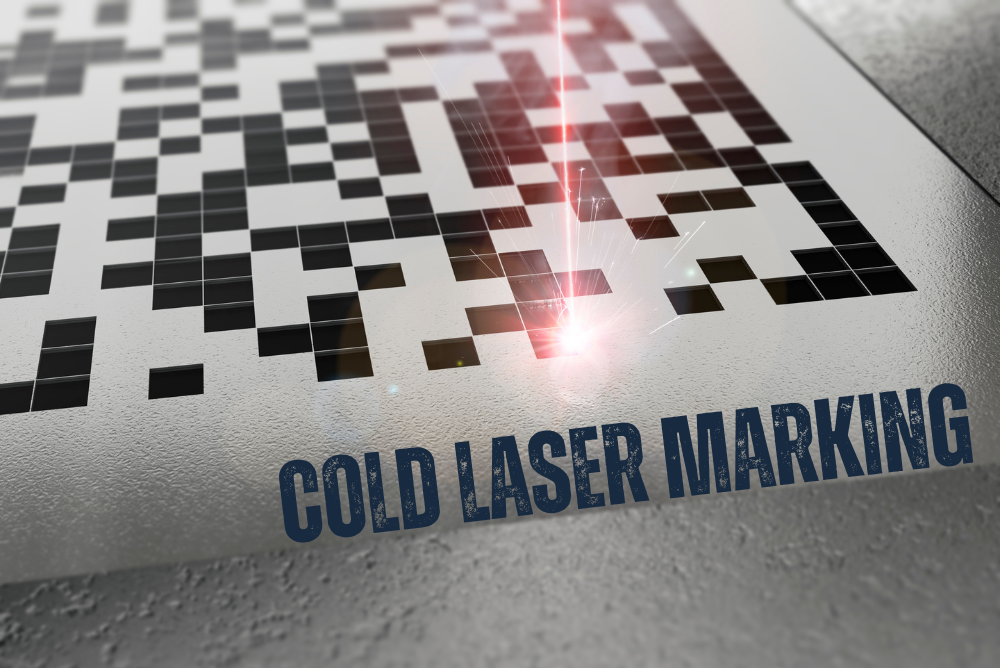
With short pulses and high peak power, MOPA lasers can achieve what is often referred to as “cold marking.” Laser energy is delivered within an extremely short time frame, preventing heat from spreading to surrounding areas.
This significantly reduces the risk of warping, discoloration, or microcrack formation—an especially critical advantage when processing thin plastics, coated metals, or electronic components.
Faster Deep Engraving
When using longer pulses, MOPA lasers can deliver energy more steadily, allowing deeper material removal with fewer scan passes. This flexibility makes MOPA lasers highly effective for industrial engraving applications such as tools and heavy-duty mechanical components.
The engraving process is faster while still maintaining clean edges and a high-quality surface finish.
Limitations of MOPA Lasers
Although MOPA lasers offer outstanding advantages in pulse control and marking quality, there are still some limitations that users should consider when selecting this technology:
First, MOPA systems are more complex than standard fixed-pulse fiber lasers. To fully leverage MOPA’s capabilities, operators or application engineers must understand the relationship between pulse width, frequency, peak power, and material behavior. Without proper parameter optimization, it is easy to end up in a situation where a “MOPA laser is used like a standard fiber laser,” failing to unlock its real advantages.
Second, MOPA lasers are not well suited for organic materials such as wood, leather, paper, or certain soft polymers. These materials are generally better processed with CO₂ lasers. For non-metal marking applications, MOPA is neither the most efficient nor the most cost-effective choice.
In addition, the initial investment cost of a MOPA system is typically higher than that of fixed-pulse fiber lasers—especially for models with a wide pulse adjustment range and higher output power. As a result, MOPA lasers are better suited for factories with clear technical requirements, rather than for simple, general-purpose marking applications.
Comparison of MOPA Lasers with Other Marking Technologies
|
Tiêu chí |
Laser MOPA |
Fiber laser |
Laser CO₂ |
Laser DPSS |
|
Technology |
Master oscillator amplification with pulse duration (2 to 500 ns). |
Laser fiber with fixed pulse duration s(≃ 100 ns). Wavelength 1,064 nm. |
CO2 gas-based laser. |
laser. |
|
Applications |
High-contrast black marking on steel and aluminum, and high-precision marking on plastics. |
Deep marking or engraving on metals and some plastics. |
Engraving on organic materials (wood, glass, leather). |
Precision marking on heat-sensitive plastics, reflective metals and multilayer materials. |
|
Advantages |
Versatility, high-contrast, low temperature, aesthetic quality and precision. |
Easy to use, relatively low cost, varied applications. |
Specific applications, relatively low cost. |
High precision, low thermal footprint, adaptability to various materials, long service life, low maintenance. |
|
Limitations |
More complex configuration, unsuitable for organic materials. |
Less effective on fine, high-contrast markings, not very flexible. |
Incompatible with metals (except anodized aluminum and coated metal), poor field of action on plastic (white marking possible on the surface of some transparent plastics). |
High cost, less suitable for large surfaces or high-speed applications. |
Industrial Applications of MOPA Fiber Lasers
MOPA laser systems are widely used for permanent marking across a broad range of industrial sectors, including the following applications:
Medical Device Marking
In the medical field, traceability and long-term marking durability are critical requirements. Surgical instruments, implants, and diagnostic devices must carry Unique Device Identification (UDI) codes that remain clearly legible throughout the entire product lifecycle. Traditional marking methods can damage the surface, increasing the risk of wear or degradation during repeated sterilization cycles.
MOPA lasers address this challenge by producing high-contrast, corrosion-resistant markings while preserving the integrity of the material surface. On stainless steel surgical instruments, MOPA technology can generate deep black markings with minimal microcracking or surface roughness—both of which could otherwise become breeding grounds for bacteria.

Aerospace and Defense
Applications in the aerospace and defense sectors demand markings that can withstand extreme temperatures, intense vibration, and harsh operating environments. Serial numbers and component identification codes must remain durable and legible over long service lifetimes. MOPA fiber lasers provide the precision and reliability required to meet these stringent performance standards.

Automotive Industry
The automotive industry is characterized by high production volumes and a wide variety of marking requirements. From vehicle identification numbers (VINs) and component codes to user-interface elements such as switches and control panels, markings must be both precise and durable.
MOPA lasers can perform deep, permanent engraving for VIN codes while also delivering refined surface marking for illuminated buttons and backlit switches. This “two-in-one” capability allows manufacturers to optimize production lines by using a single laser system to handle multiple marking tasks.

Construction
Equipment and materials used in construction and residential environments often require permanent markings for traceability, standards compliance, and safety assurance. Steel structures, heavy-duty mechanical parts, and identification plates must withstand outdoor exposure and mechanical wear.
MOPA lasers produce durable, weather-resistant markings on steel, aluminum, and coated metals. The controlled thermal input minimizes material distortion, ensuring sharp and consistent markings even on thick or surface-treated materials.
Defense and Security
The firearms and ammunition industry requires permanent, tamper-resistant markings to comply with legal regulations, manage serial numbers, and support brand identification. MOPA lasers can create high-contrast, corrosion-resistant markings on steel, aluminum, and even certain polymer components used in firearms.
High precision enables micro-marking of detailed serial numbers or logos while preserving the structural integrity of barrels, receivers, and cartridge cases.
Consumer Goods
MOPA lasers enable color marking on a wide range of materials, making it possible to engrave logos, images, and decorative elements. Adjustable pulse width allows energy input to be carefully controlled, making MOPA suitable for both functional marking and aesthetic branding applications.

Food and Packaging
The food and packaging industry requires non-toxic, clearly legible markings for batch codes, expiration dates, and traceability. The non-contact, ink-free marking process of MOPA lasers eliminates the risk of chemical contamination on plastics and coated metals.
electing the right MOPA laser system—along with the appropriate configuration and operating parameters—allows manufacturers to fully leverage the technology’s advantages and meet increasingly stringent technical and regulatory requirements. Temas is currently the authorized distributor of Gravotech laser marking systems in Vietnam. Please contact Temas for detailed consultation and to identify the most suitable products and solutions for your specific application needs



 Read more